
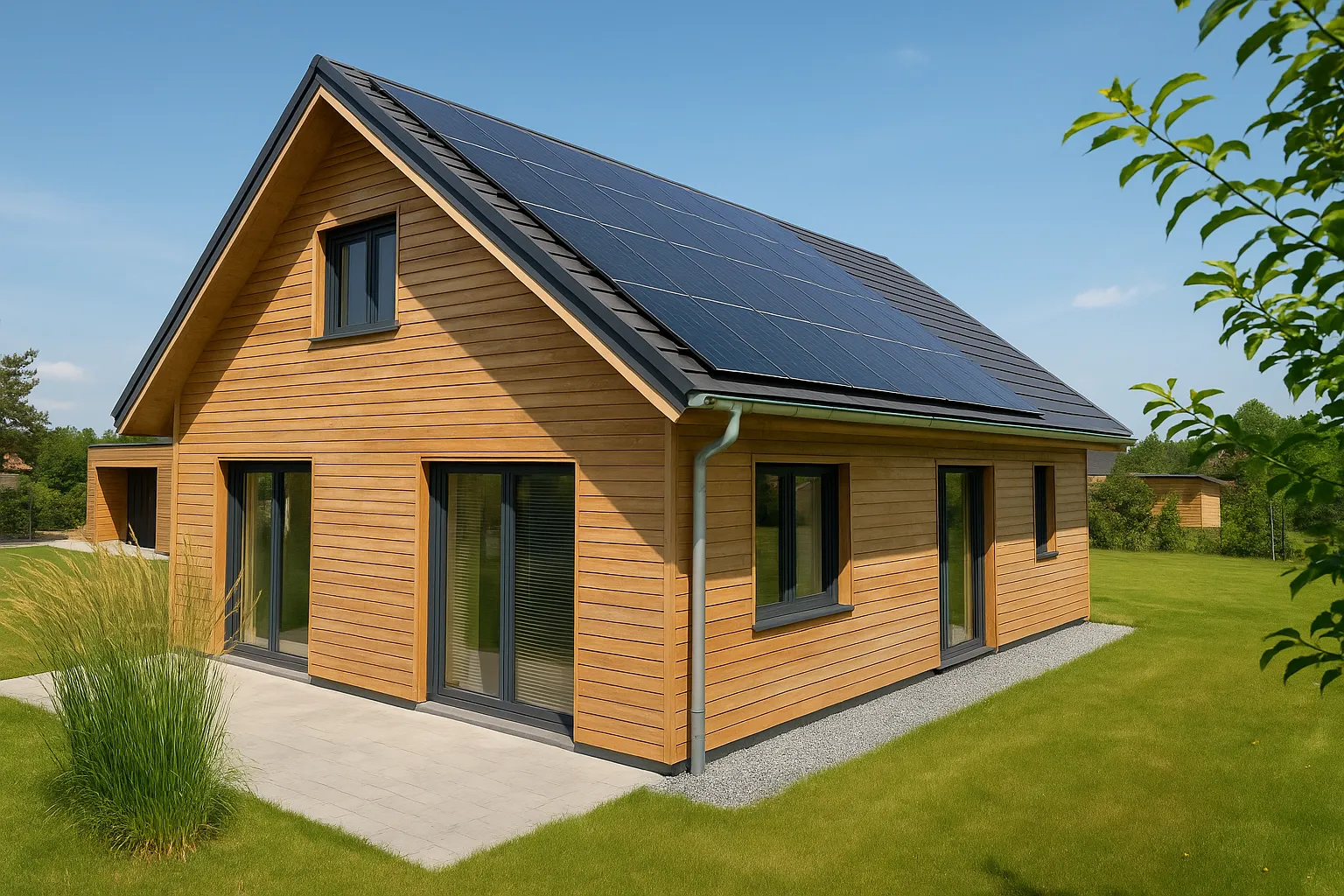
Homes that are comfortable, low-carbon, and durable are no longer niche—they are rapidly becoming the standard. This guide explains the core technologies, the best-practice materials, and where residential construction is heading next.
Why Sustainable Housing Matters Now
Residential buildings account for a significant share of energy use and operational emissions. As energy prices fluctuate and climate regulations tighten, sustainable construction delivers both resilience and long-term savings. Beyond carbon and cost, it also improves health: better ventilation, low-VOC finishes, and moisture-safe details reduce indoor air pollutants and mold risk. In colder climates, where heating seasons are long, high-performance envelopes and efficient systems can slash energy demand by 50–80% compared to conventional builds—while making homes quieter and more comfortable.
Materials: From Structure to Finishes
Choosing materials with low embodied carbon and proven durability is foundational. Engineered timber (glulam, CLT, LVL) and timber-frame assemblies store biogenic carbon and typically have lower production emissions than concrete-dominant systems. Where concrete is necessary, specify mixes with supplementary cementitious materials and optimized cement content. For thermal insulation, consider mineral wool, wood-fiber boards, or cellulose—each with strong environmental profiles and robust performance. Rigid foam still has a role in targeted, moisture-exposed locations, but aim to minimize high-GWP blowing agents.
Finishes affect health as much as aesthetics. Favor low- or zero-VOC paints, formaldehyde-free cabinetry, and responsibly sourced flooring (solid wood, cork, linoleum). Wet-area boards and membranes should be selected for both water resistance and non-toxicity. Wherever possible, design for disassembly: mechanical fasteners, reversible joints, and modular interior systems allow components to be replaced or recycled rather than landfilled.
Building Envelope: Airtight, Insulated, and Moisture-Smart
A high-performance building starts with an envelope that is airtight and thermally robust. Target continuous insulation that wraps the structure with minimal thermal bridges at balconies, sills, and framing junctions. Use an airtightness layer (membrane, taped sheathing, or wet-applied system) with simple continuity across walls, roof, and slab edge. Verify with blower-door testing at key construction stages. Moisture control is equally critical: employ vapor-variable membranes in cold climates, capillary breaks at foundations, and ventilated rainscreens behind cladding. These measures protect the structure, extend service life, and stabilize indoor conditions year-round.
Glazing should be sized and oriented consciously. High-spec triple glazing with warm-edge spacers and insulated frames cuts losses in winter, while exterior shading and selective coatings limit summer gains. Frame the solar strategy early so that window placement, shading, and roof geometry support both comfort and future photovoltaic capacity.
Prefabrication and Modular Construction
Prefabrication—panels, volumetric modules, or hybrid systems—moves complexity into a controlled factory setting. The benefits are substantial: tighter tolerances, repeatable airtightness, reduced waste, and accelerated site schedules. For sustainability, factory QA reduces the risk of envelope defects that undermine energy performance. Logistics planning is crucial: panel dimensions should fit transport constraints and crane capacity; just-in-time deliveries limit weather exposure and neighborhood disruption. Modular interiors can also be designed for future reconfiguration, supporting circularity by enabling reuse rather than demolition.
Heating, Cooling, and Ventilation Technologies
Once energy demand is minimized by the envelope, focus on efficient systems. Air-to-water or air-to-air heat pumps provide low-carbon heating and cooling with excellent seasonal performance. In colder regions, pairing a heat pump with radiant distribution or low-temperature fan coils maximizes efficiency. Mechanical ventilation with heat recovery (MVHR) maintains healthy indoor air while retaining 70–90% of exhaust heat, reducing heating loads and condensation risk. Smart controls can coordinate set-points, schedules, and demand response with minimal user intervention.
Domestic hot water is often the sleeper load. Consider heat-pump water heaters, drain-water heat recovery, and pipework layout that minimizes circulation losses. Where solar exposure is strong, rooftop PV coupled with smart hot-water tanks or small battery storage shifts usage to daylight hours and trims grid imports.
Water, Landscape, and Site Strategies
Sustainable homes extend beyond the walls. Low-flow fixtures, on-demand recirculation, and leak detection reduce potable water use. Rainwater harvesting can supply irrigation or flushing, while permeable hardscapes and bioswales keep stormwater on site, reducing sewer loads and replenishing groundwater. Native plantings cut maintenance and support biodiversity. On tight urban plots, green roofs moderate heat, add insulation value, and slow runoff—all while creating pleasant outdoor space.
Digital Design: BIM, Energy Modeling, and LCA
Digital tools align the team around performance from day one. Building Information Modeling (BIM) coordinates architecture, structure, and MEP, minimizing clashes before fabrication. Early-stage energy modeling informs window sizing, insulation levels, and shading strategies; envelope details can be tested virtually to avoid thermal bridges. Life Cycle Assessment (LCA) quantifies the embodied carbon of materials and compares design options. Carry these models into operations: a clear as-built dataset, paired with metering, helps tune systems and validate performance targets after move-in.
Cost, Value, and Payback
Sustainable construction is not simply about spending more—it is about spending smarter. Upfront investments in the envelope and efficient systems usually deliver lower operating costs and higher comfort for decades. Prefabrication reduces site labor risk, while standardized details improve quality and speed. When evaluating budgets, consider total cost of ownership: energy bills, maintenance, replacement cycles, and resilience to energy-price shocks. Many jurisdictions also offer incentives or favorable financing for high-performance homes, improving the business case further.
Future Directions: Electrification, Storage, and Circularity
The next decade will accelerate three converging trends. First, full electrification replaces on-site combustion with heat pumps and induction cooking, enabling low-carbon operation as grids decarbonize. Second, distributed energy resources—rooftop PV, batteries, and smart hot-water tanks—turn homes into flexible grid assets, shifting loads and providing backup during outages. Third, circularity will reshape product selection and detailing: reusable components, take-back programs, and materials passports will make buildings more like material banks than one-way sinks.
Practical Roadmap for Your Project
- Set clear performance goals: Energy use, airtightness, and comfort metrics defined at the outset.
- Choose the right team: Architect, engineer, and builder experienced in airtightness, moisture control, and heat-pump systems.
- Model early and often: Iterate envelope details, shading, and HVAC sizing using energy and thermal-bridge analysis.
- Prefabricate where it helps: Panels or modules for speed, quality, and waste reduction.
- Specify healthy, low-carbon materials: Verify EPDs, VOC limits, and responsible sourcing.
- Plan QA/QC and testing: Blower-door at mid-build and completion; commissioning for HVAC and ventilation.
- Measure and tune: Meter key loads, check comfort, and adjust controls during the first seasons.
Conclusion
Sustainable housing blends wise material choices, disciplined envelope design, and efficient, electrified systems into homes that are healthier, cheaper to run, and resilient to future energy and climate shifts. With prefabrication, digital coordination, and a clear performance roadmap, delivering this standard is practical today—not a distant aspiration. Start by defining targets, assembling an experienced team, and locking in envelope details that support comfort and low energy for the building’s entire life.
Next step: Draft a one-page brief listing your energy goals, preferred materials, and envelope targets, then ask two design-build teams for proposals that include modeling results and commissioning plans.